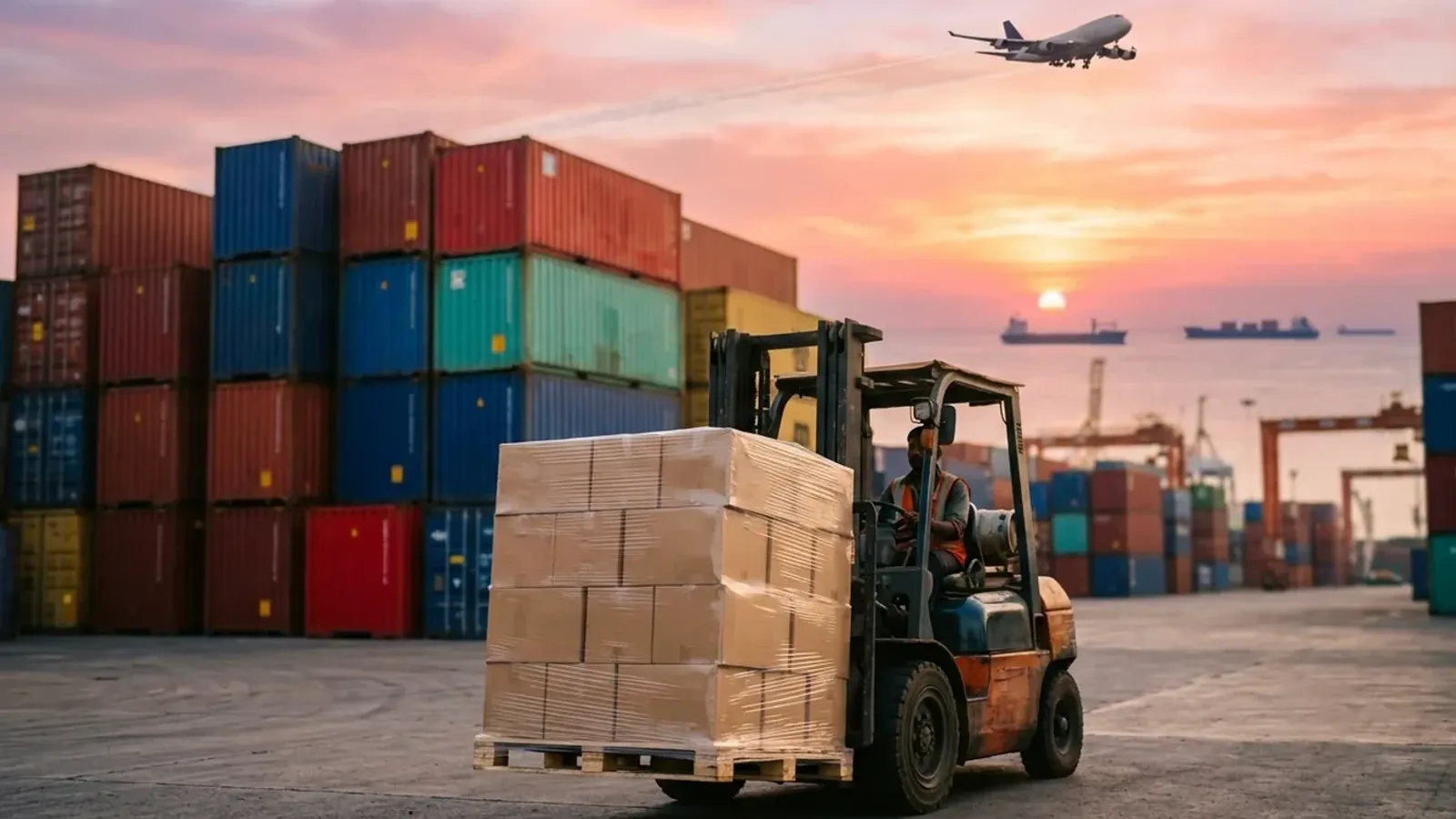
Amazon Global Selling lets you list on Amazon’s stores abroad and ship from India. Amazon says more than 200,000 exporters have registered since the programme started here in 2015, and that their cumulative exports passed US$20 billion by 2025. Amazon’s Exports Digest 2025 puts Delhi first, with more than 32,000 exporters on the programme in 2024.
This guide covers the US, Canada and Australia. They share a language, but much of the paperwork differs, and we flag where it does.
We read every source here on 29 September 2026: Amazon’s pages, government sites and press reports. Fees and rules change often, so check the live page before you spend money.
Which marketplaces you can sell in
Amazon’s Global Selling pages for India list stores across North America, Europe, the Middle East and Asia-Pacific, including all three covered here. We cover the UK, Germany and the rest of Europe and the UAE in their own guides.
Differs by marketplace: the US and Canada share one North America account, which also covers Mexico and, Amazon’s US site says, Brazil. Amazon notes that costs and product requirements still vary from store to store. Australia is a separate Seller Central registration.
What you need to register
Amazon asks for:
- ID proof: Aadhaar, PAN, passport or driving licence
- Business proof: GST number, business PAN, Udyam or FSSAI
- Address proof, such as a bank statement dated within 180 days
- A card enabled for international use (Amazon charges the monthly fee to it)
- Your bank account details
Amazon lists the IEC (Importer Exporter Code) as mandatory to export. It’s a 10-digit number from DGFT, usually issued within two working days, Amazon says. It doesn’t expire, but you must update it every year between April and June or it’s deactivated.
You’ll also need an AD code from your bank and a GST LUT to export without paying IGST. Some DGFT filings need a Class 3 digital signature certificate, but Amazon says you can apply for and update an IEC with an Aadhaar OTP.
Depending on the product, route and destination, Amazon says shipments may need a shipping bill, commercial invoice, packing list, air waybill or bill of lading, certificate of origin and insurance certificate. Your CA should confirm what applies to you. Amazon’s Export Navigator dashboard walks you through the documents too.
Differs by marketplace:
- US: every seller completes Amazon’s Tax Information Interview. Non-US individuals file a W-8BEN, businesses a W-8BEN-E. The IRS says the form stays valid until the end of the third calendar year after you sign it, unless your details change.
- Canada: the CRA’s digital-economy rules cover goods sold from Canadian stock, such as FBA inventory. The CRA says a non-resident vendor whose threshold amount passes CAD 30,000 must register for GST/HST under the normal regime. For vendors who aren’t registered, a registered platform collects and remits it. Ask a Canadian tax adviser how the threshold applies to you.
- Australia: a separate signup asks for photo ID, proof of address, business verification, an international card, bank details and tax information. We couldn’t confirm the tax details or GST rules for overseas sellers, so get advice first.
Getting paid in India
Amazon Currency Converter for Sellers pays into your bank account in INR. The fee is 1.5% if your cross-currency volume over the last 12 months is under US$500,000, falling in steps to 0.75% above US$10 million. Amazon says money generally arrives in one to five business days.
Shipping and fulfilment
- FBA: Amazon stores your stock, ships orders, and handles customer service and returns. Listings usually get the Prime badge. FBA is open on both plans, but Amazon tells sellers in India to open a Professional account to sell in the US.
- Merchant-fulfilled: you ship each order. Amazon suggests this for heavy, bulky, variable or made-to-order items.
Amazon sets out who handles customs and support:
- If you send stock to Amazon’s warehouses abroad, you or your shipping provider must act as exporter of record and importer of record. Amazon won’t pay customs duties on FBA stock.
- If you ship orders yourself, you’re the exporter of record.
- Either way, you may need a customs broker or freight forwarder.
- Customer support must be in the local language. With FBA, Amazon handles it. If you ship yourself, you arrange it.
Differs by marketplace:
- US: Amazon Global Selling SEND collects from anywhere in India and handles shipping and customs to US fulfilment centres.
- Canada: no source confirms SEND from India to Canada. Importing needs a CARM Client Portal account, a business number (non-residents register with the CRA first) and an import account. The importer of record pays duties and taxes.
- Australia: no source confirms SEND from India. Amazon.com.au’s SEND page covers China-origin cargo only.
Amazon’s Service Provider Network lists third parties for shipping, customs clearance and compliance testing. For courier exports, CBIC removed the ₹10 lakh per-consignment cap from 1 April 2026, Inc42 reported.
Compliance, market by market
This is what official sources confirm. It isn’t a full list.
US
- Children’s products for age 12 or under, where a CPSC rule applies, need a Children’s Product Certificate based on testing by a CPSC-accepted lab. From 8 July 2026, importers of most regulated products must file certificates electronically with US Customs.
- Textile labels need fibre names with percentages, the country of origin, and your business name or an FTC RN. Online listings must say the item is imported.
- Cosmetics fall under MoCRA: FDA facility registration (foreign makers included), product and ingredient listing, and reporting serious adverse events within 15 business days.
Our guides to the US rules Amazon.com asks Indian brands to follow and what to change in your listing for Amazon.com go into more detail.
Canada
- The Canada Consumer Product Safety Act bans products that are an “unreasonable danger” and requires incident reporting and records.
- Prepackaged non-food labels must show all mandatory information in English and French. Only the dealer’s name and address can be in one language.
- Textile labels list each fibre at 5% or more, by name and percentage, in both languages.
- Health Canada says every manufacturer and importer must notify it within 10 days of first selling a cosmetic in Canada.
- We couldn’t confirm whether Amazon.ca needs French listings, so check.
Australia
- The ACCC lists 50 mandatory standards, covering baby products, clothing, cosmetics, electronics, toys, sports equipment and button batteries, among others. Supplying goods that don’t comply is an offence.
- Cosmetics must list their ingredients on the container, and the ACCC says ingredient information should be available at the point of sale. Ask an adviser how that applies to an online listing.
Some categories need approval on Amazon.ca and Amazon.com.au. Check yours before you make stock.
Trademarks and Brand Registry
Brand Registry accepts a registered trademark or a pending application from the trademark office of any country with an Amazon store. It must be a word mark, or an image mark containing words, letters or numbers. You enrol with one country’s mark and add others later.
Amazon recommends a trademark for each store you sell in. Its US site says one approved trademark gives you a Brand Registry account you can use in every Amazon store, but its India page says the mark should be operational in each country you register in. Ask a trademark agent which applies to you before you commit.
Brand Registry is free on Amazon.ca and Amazon.com.au, and both offer IP Accelerator, Amazon’s network of vetted law firms.
Fees and pricing, at a high level
| US | Canada | Australia | |
|---|---|---|---|
| Individual plan | US$0.99 per item sold | CAD 1.49 per item | A$0.99 per unit |
| Professional plan | US$39.99 a month, covering the US, Canada and Mexico | included in the US$39.99 North America fee (CAD 29.99 only on a Canada-only account) | A$49.95 a month if you sell only there |
| Referral fees | mostly 8–15%; 15% in most categories | mostly 8–15%; 15% in most categories | mostly 6–15% |
| Minimum referral fee | US$0.30 in most categories | CAD 0.40 in most categories | none |
Australian fees exclude GST, which Amazon says applies to most items sold there. If you link stores into one account, Amazon says you pay the equivalent of US$39.99 a month in total, split across the stores with active listings. FBA and storage fees are extra.
For the US, check duties before you price. The US Trade Representative’s notice puts an extra 10% Section 301 duty on Indian goods entered from 24 July 2026, on top of the normal duty, with some exemptions. The Commerce Ministry says about 45% of India’s US exports are exempt. Low-value parcels no longer enter duty-free. These rules changed several times in 2026, so ask a customs broker about your product.
Launch incentives differ by marketplace. The US offers new sellers 10% back on the first US$50,000 of branded sales, then 5% up to US$1 million, if you join Brand Registry within six months of listing. Amazon.ca’s Brand Registry page offers 10% back on the first CAD 70,000 of branded sales. Amazon.com.au offers a 5% referral-fee credit on the first A$1.5 million of branded sales if you become the brand’s first Brand Representative in Australia within six months.
Amazon India says its incentives for exporters cover only the US, UK, France, Italy, Spain and Germany. Check whether you qualify for the Canadian or Australian offers before you count on them.
Which categories Amazon points to
Amazon’s Global Selling pages point Indian exporters to these:
- US: sheet sets, towels, T-shirts, rugs, science kits, hair oils, body butters and supplements
- Canada: home, apparel, beauty, health and personal care, kitchen and jewellery, with demand for traditional Indian items
- Australia: Amazon lists home, beauty, kitchen and electronics among Amazon Australia’s bestsellers, and says it supports exports in more than 30 categories, including home textiles, garments, spices, jewellery and leather goods
How to start with one marketplace
Pick one store, get it working, then add the next.
- Choose. Weigh the shipping, labelling and tax differences above against your product.
- Check your category. Approvals, safety standards and labels. Toys and cosmetics carry heavier rules.
- Sort the paperwork. IEC, AD code and LUT with your CA; the trademark with an agent.
- Build listings for that shopper. Rewrite titles, bullets and descriptions, and follow the store’s own image guidelines. That’s cataloguing, product photography and A+ content.
- Start small. A small FBA shipment, or a few orders you ship yourself. Read the returns and reviews.
- Then advertise. Once the listing converts, Amazon Ads help it get found.
Before you ship
Selling abroad is mostly paperwork, labels and landed cost. But shoppers only see the listing, so give it the same care. If your Amazon listings in India aren’t in shape yet, fix those first.
If you’d rather hand it over, tell us what you sell, and we’ll tell you what to fix first.