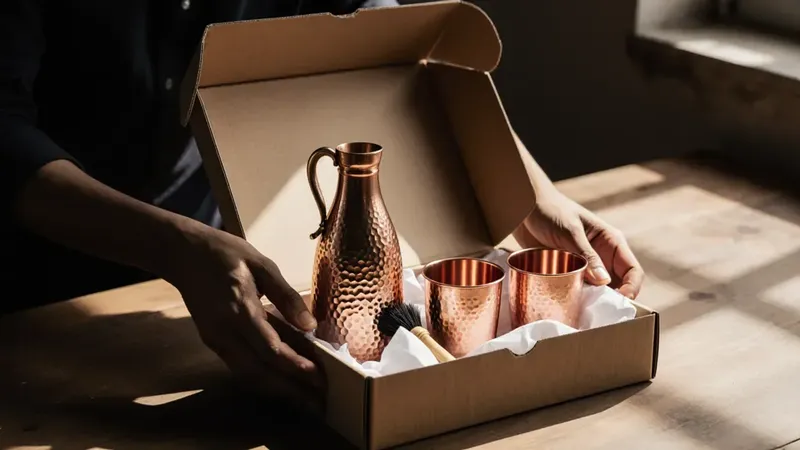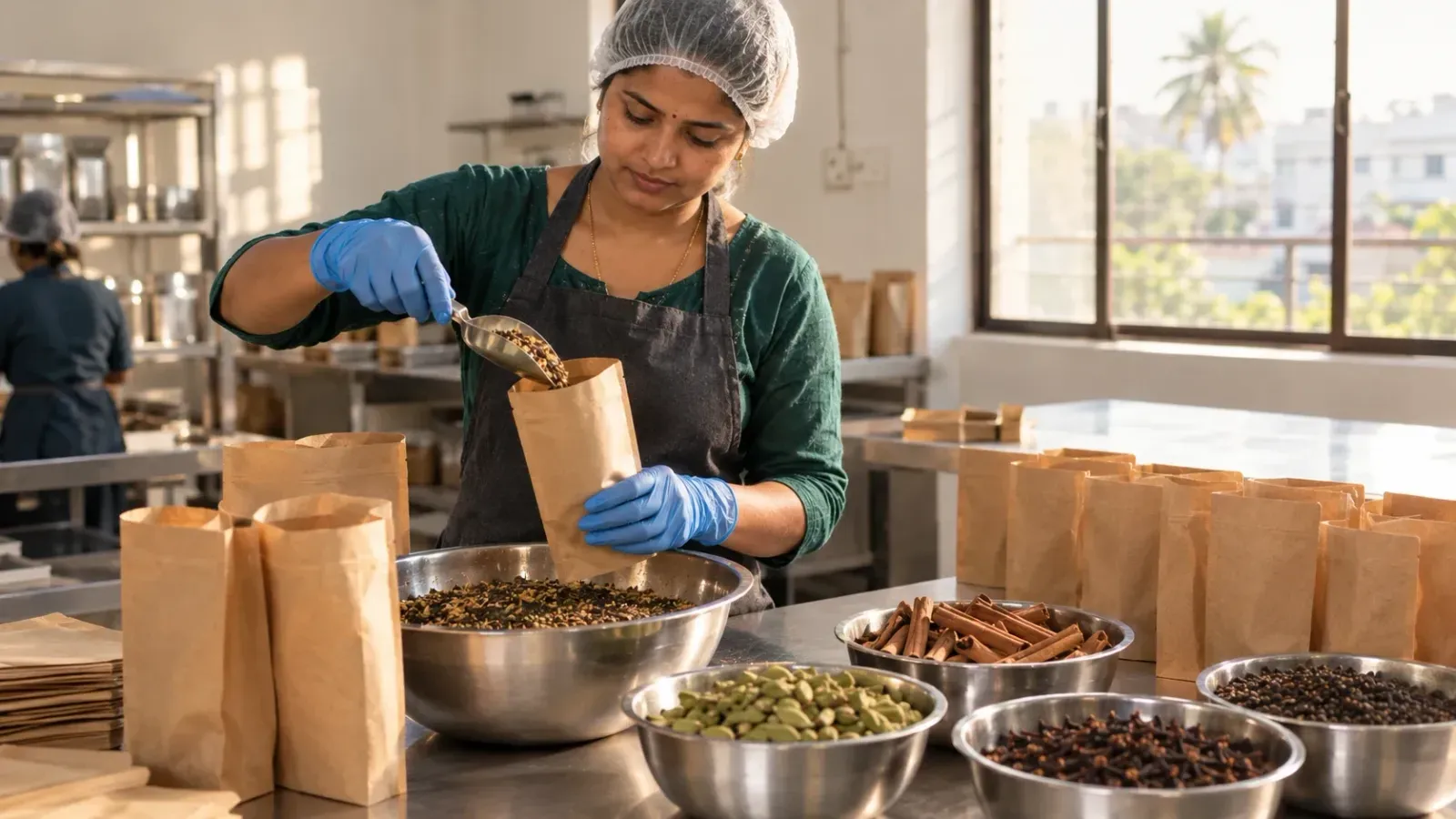
Say you sell masala chai and spice blends from Ahmedabad, and your packs do well on Amazon.in. The front has your brand name in English, a Hindi tagline under it, and the FSSAI logo. You have found a buyer for your first shipment to Amazon’s US warehouses, and the stock is ready.
Before that stock can be sold on Amazon.com, your factory must be registered with the US Food and Drug Administration (FDA). Your pack must also follow US label rules, and your Hindi tagline matters there, as you will see below. Even the place where you print “Made in India” can cost you money.
This article covers the US rules Amazon.com most often asks Indian brands about, and what they mean for your pack and your listing. It is general information, not legal advice. Where you need a lawyer, a lab or a customs broker, we say so.
First, how Amazon checks
Amazon puts the responsibility on the seller. You must follow US law and Amazon’s own rules before you list a product, and for as long as it stays live. For many higher-risk products, Amazon no longer accepts documents straight from the seller. An Amazon-approved testing company must test or check the product and send the results to Amazon.
Some categories also need product liability insurance of at least 1 million dollars. These include toys, dietary supplements, small kitchen appliances, power banks and other lithium battery products, mattresses and helmets.
If a product breaks the rules, Amazon can remove the listing and hold back your payments. It can also destroy the stock in its warehouse without paying you. You will find what each product needs in Seller Central’s Compliance Reference tool, and what each listing is missing in the Manage Your Compliance dashboard.
Food, spices and tea
Every factory that makes, packs or stores food for the US must be registered with the FDA before it starts. That includes Indian factories. Registration is free, and you do not need an agent to buy a certificate for you. The FDA does not issue registration certificates, and it does not recognise the ones private firms sell. A foreign factory must name a US agent, a person or business actually present in the US.
Registrations must be renewed every even-numbered year, between 1 October and 31 December. The 2026 window opens on 1 October. A registration that is not renewed by 31 December expires, and food from an unregistered factory is held at the US port. The FDA’s renewal guide explains the steps.
Every food shipment also needs a Prior Notice filed with the FDA before it arrives. A customs broker usually files it. The shipment also needs a US importer who takes responsibility for checking that your food is safe.
Now the pack. All the required label information must be in English: the product name, net quantity, ingredients, a Nutrition Facts panel, and the maker’s or distributor’s name and address. Allergens must be declared. The US has nine major allergens, and sesame is one of them.
Here is where the Hindi tagline matters. Under FDA rules, if a food label carries anything in another language, all the required label information must appear in that language too. So a pack with Hindi on it needs the ingredients, allergens and other required details in Hindi as well. The FDA’s rule does not say whether a brand name in Hindi on its own counts, so ask a regulatory adviser about your pack. For most brands, the simple answer is an English-only pack for the US.
Amazon adds rules of its own. Every unit needs an expiry date, and so does the outer carton. When stock arrives at an Amazon warehouse, it must have enough shelf life left. Amazon’s guide asks for 270 days for spices and tea. Amazon.com also does not allow betel nut or plates and bowls made from areca palm leaf. Poppy seeds are allowed only from approved brands, in packs of one pound or less.
The FDA also has import alerts on some spices from India, including black pepper. Check whether your product is covered before you ship.
Beauty, personal care and Ayurveda
Cosmetics fall under a US law called MoCRA. Every factory that makes cosmetics for the US must register with the FDA, including Indian factories, and name a US agent. The brand named on the label must list each product and its ingredients with the FDA within 120 days of first selling it in the US. The FDA’s MoCRA registration page explains both.
Since 29 December 2024, every cosmetic label must also show a US address, a US phone number, or a website or email where customers can report side effects. The FDA says the website or email can be Indian. The rule on other languages applies to cosmetics too.
Small brands with US cosmetic sales under 1 million dollars a year are exempt from registration and listing. The exemption does not cover products used around the eye, such as eyeliner, or products like hair dye that change your appearance for more than a day.
Some Indian beauty products cannot be sold on Amazon.com at all, such as kajal and henna for the skin. Our article on what to change in your listing for Amazon.com covers those, and the claims Amazon does not allow.
Prop 65: the California warning
Prop 65 is a California law. It requires a warning when a product exposes people in California to a chemical on its list of more than 850 chemicals linked to cancer or reproductive harm. For Indian home products, lead is one to watch, because brass can contain it.
The short-form warning changed on 1 January 2025. It must now name at least one chemical. Products made and labelled with the old short form before 1 January 2028 can still be sold. For new packs, use the new wording. It needs a yellow warning triangle at least as tall as the word “WARNING”, and text of at least 6 point. California’s Prop 65 office has the new wording.
For online sales, the warning must be on or with the product, and also on the product page. On Amazon, you add it in the listing’s Compliance tab, on each child product. Amazon’s help page still describes the old wording, so check with Seller Support which option to choose for a new-style warning.
Kids, electronics and home
Children’s products for ages 12 and under need a Children’s Product Certificate, based on tests by a lab that the US product safety regulator, the CPSC, accepts. They also need tracking labels on the product and on the pack. Since 8 July 2026, importers must also file the certificate data electronically with US Customs. For toys, Amazon wants a lab report from the last 12 months, the certificate, and the 1 million dollar insurance. Never write “CPSC certified” on a listing. The CPSC does not certify products.
Electronics with Bluetooth or Wi-Fi need FCC certification. Simpler devices can use a declaration instead, but that needs a responsible party based in the US. Lithium batteries need UN 38.3 test reports, and Amazon asks for UL safety standards on top. Amazon.com also bans cylindrical lithium cells such as the 18650 type, and products that contain them.
Home products have their own rules. Plywood, MDF and particleboard must carry a “TSCA Title VI compliant” label. Decorative ceramics that look like tableware need a “Not for Food Use” label. Rugs must meet US flammability standards, and textile listings must say “Imported”.
“Made in India”, in the right place
US Customs wants the country of origin marked in English, where the buyer can easily see it. If your pack shows a US address, for example the US contact you add for cosmetics, write “Made in India” close to it. If your pack or brand story names another place, such as Paris or New York, “Made in India” must appear close by, at a similar size. Goods that are not marked correctly pay an extra 10% duty.
Where we come in
We design packaging and make listings for brands that sell on Amazon.com. When a brand goes to the US, we redesign the pack for US rules: English-only labels or full translations, allergen statements, the US contact for cosmetics, Prop 65 warnings where they are needed, and “Made in India” in the right place. Then we build listings that do not make claims Amazon removes. See our packaging design work, and our Global Selling guide for the rest of the move to the US.
We are not a lab or a law firm. FDA registration, testing and certificates need specialists, and we tell you when you need one. But a pack that is designed for the US from the start saves you from reprinting it after your first shipment is held.