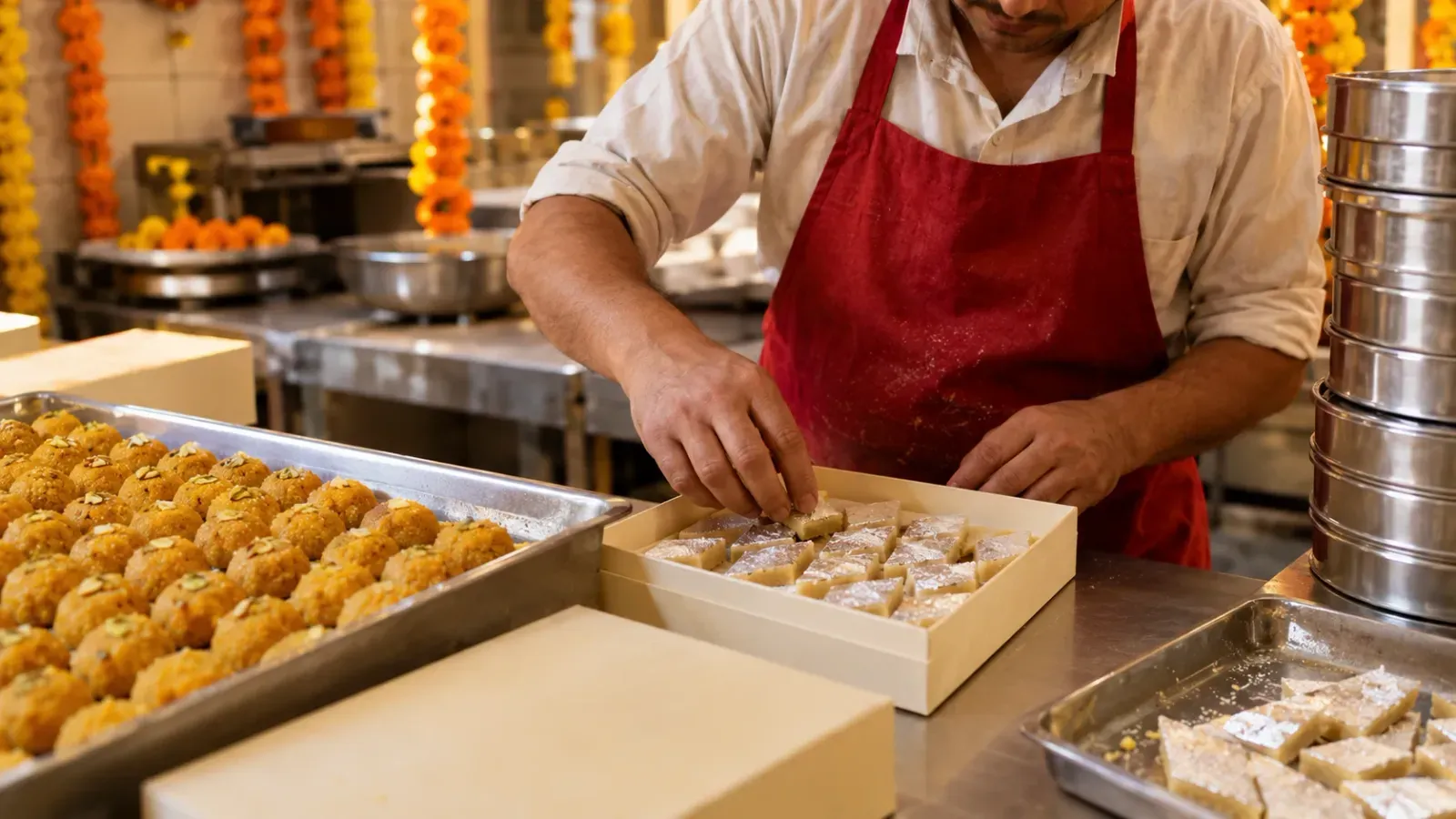
Say your family has made sweets in Bikaner for thirty years. Your kaju katli sells out every Diwali, and so do your rasgullas, which you also pack in tins. This year, your daughter wants to put both on Blinkit, Zepto and Instamart. It is the first week of October, and Diwali is on 8 November.
The tinned rasgullas can probably make it. The fresh kaju katli will struggle. And if your brand is new to Blinkit, this Diwali will reach fewer shoppers than you hope. Here is why, and what we would do about it.
The calendar
Diwali is on Sunday 8 November this year. Dhanteras falls on Friday 6 November, and Bhai Dooj on Wednesday 11 November. Last year, Zepto’s busiest day was the day before Diwali, with 2.37 million orders, according to Business Standard. So your stock needs to be sitting in dark stores before 6 November.
A dark store is a small warehouse close to shoppers, where quick-commerce orders are packed. On Blinkit, you do not deliver to dark stores yourself. You deliver to a Blinkit warehouse, and Blinkit moves the stock to its dark stores. The Blinkit Seller Hub Guide says this move takes 2 to 3 days.
If you are new to Blinkit, there is a bigger wait. The guide says a new listing takes about 7 days to approve. Then the product starts in a trial cluster: one warehouse and 10 to 15 of its best-performing dark stores. Each stage lasts 30 days, and the product moves up only if it meets its targets for sales, complaints and availability.
As we read this, a sweets brand that lists on Blinkit this week will most likely still be in its trial cluster at Diwali. That is not a reason to wait. The trial is how you get to the next stage, so the sooner it starts, the better. But plan this Diwali as a test in one area, not a launch across India.
Which sweets last long enough
Most mithai lasts days, not weeks. FSSAI’s own guidance on milk sweets gives a rough shelf life for sweets sold loose. Kalakand should be eaten the same day. Rasgulla and sandesh last 2 days in the fridge. Peda, burfi and milk cake last about 4 days. Kaju katli, ghevar and dry fruit sweets last about 7 days. Besan laddoo, gajak and chikki last about 30 days.
Now add the travel time. Stock spends 2 to 3 days moving from the warehouse to the dark stores, and then it waits there for a shopper. FSSAI also has a rule for online food. When food reaches the customer, it must have 30 percent of its shelf life or 45 days left, according to FSSAI’s advisory to e-commerce food businesses. FSSAI does not say how this applies to a sweet that lasts only a week, so ask before you plan around it.
Packaging changes the picture. Indian dairy research shows rasgulla packed hot in sealed tins lasting about 6 months. Burfi packed with an oxygen absorber in foil lasted more than 45 days in one study, and kalakand in a gas-flushed pack kept for 60 days at 10°C in another. These are research results, not promises. Your own recipe needs its own shelf-life test by a food lab.
So in our Bikaner example, the tinned rasgullas are a good fit for quick commerce. The fresh kaju katli, with about a week of life, is a hard fit unless its packaging changes and a lab confirms the new shelf life.
None of the three apps publishes a minimum shelf life for stock arriving at their warehouses. Ask your category contact in writing before you send stock.
What the box must say
Packed sweets follow FSSAI’s labelling rules, which our guide to FSSAI rules for quick commerce covers in more detail. For a sweet box, the main points are these.
The date matters most. The box must show the date of manufacture or packing, and a “Use by” or “Expiry” date. A “Best before” date alone is not enough. For sweets that last seven days or less, the manufacture date can be left off, but the use-by date cannot. If the shelf life is three months or less, write the full date as day, month and year. If the date depends on how the box is stored, the storage conditions must be on the label too.
The front must show the name of the sweet and the green veg mark, next to the name or brand. The allergen line must say “Contains” and name milk and nuts where they are used. Nuts such as cashew, almond and pistachio are declared as “Nut”. A gift box with several packed sweets inside must carry the shortest shelf life of the sweets in it. If the outer box is what the shopper sees, it must repeat all the label details, unless it is see-through.
Three more rules apply to sweets in particular. Since June 2026, FSSAI does not allow staple pins or wires to close food packs, and its advisory names sweet boxes. Silver leaf must meet FSSAI’s standard, which includes being made without any animal material. And only permitted colours can be used, within set limits. FSSAI names non-permitted colours as a common problem in sweets. On 29 September, FSSAI asked every state to inspect and sample sweets through Navratri and Diwali, so this is the year to get it right.
Blinkit adds its own checks. The place you ship from must hold a valid FSSAI licence. Every food listing needs a photo of the pack showing the FSSAI licence number. And each listing asks for the shelf life and the storage type.
The names people search
Shoppers type the name of the sweet. But the same sweet has several names. Kaju katli is also kaju barfi. Rasgulla is also rasogolla. Laddoo is also ladoo. On Swiggy’s food app last year, gulab jamun was ordered 4.5 million times, kaju barfi 2 million times and besan ladoo 1.9 million times. The names are the ones Swiggy used.
Blinkit’s Seller Hub shows keyword trends by city and by month, and which products shoppers buy after each search. Use it to name your listing the way your city searches. Then make sure the tile works on a phone screen: the sweet visible, the name readable, and the veg mark clear. Our Diwali guide for quick commerce covers tiles and ads by city.
Where we come in
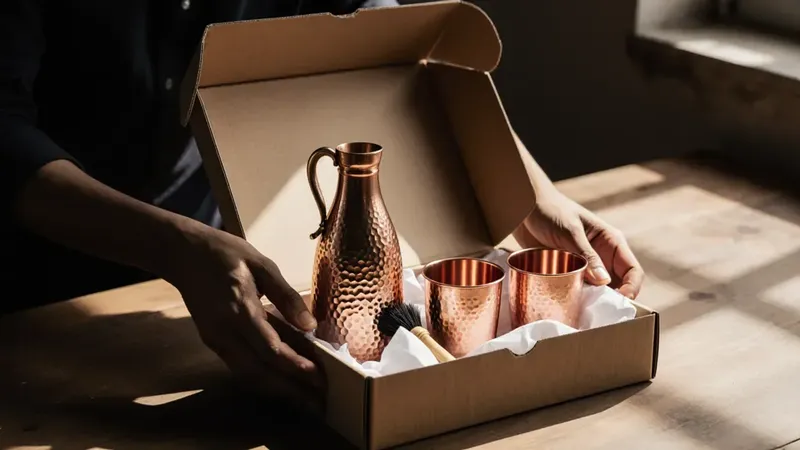
We onboard and list brands on Blinkit, Zepto and Instamart, so we know where first-time food sellers get stuck: the FSSAI image, the shelf-life field and the first trial cluster. We design sweet boxes that meet FSSAI’s label rules and still read clearly as a small tile on a phone. We shoot the photos that show what is inside the box, and we write listings with the names your city searches. See our packaging design and product photography work.
We do not issue FSSAI licences or run shelf-life tests. Those need the regulator and a lab. And no one can shorten Blinkit’s trial for you. If you are already live, get your longest-lasting sweets into stock before 6 November. If you are new, list this week, and treat Diwali as the first month of a long run.